Clean Game Architecture
Applying Clean Architecture principles to game development.
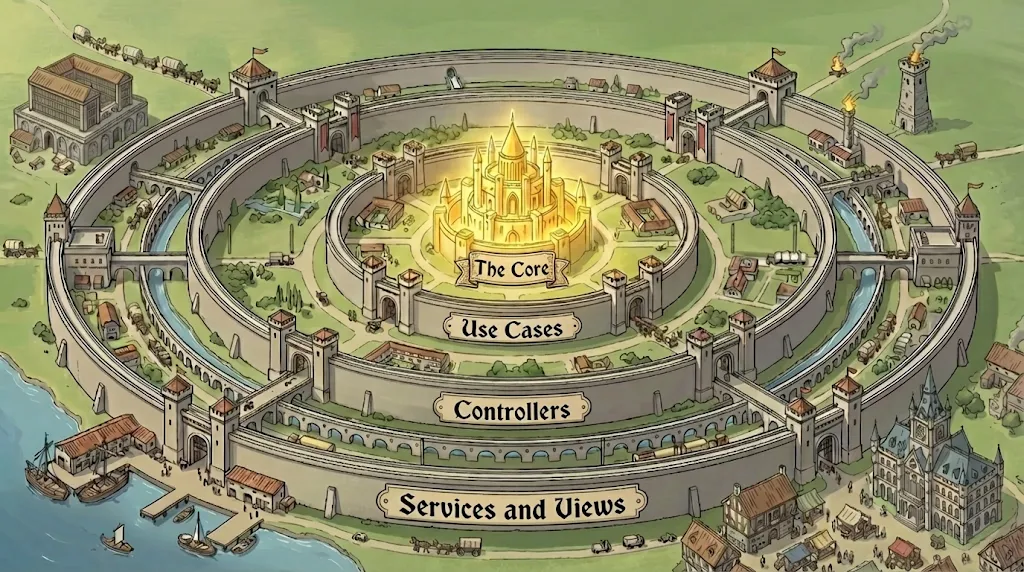
Games are deceptively complex software — yet most game codebases eventually collapse under their own weight. Keeping a well-designed architecture in games is notoriously hard: prototyping culture, tight engine coupling, and relentless deadline pressure all conspire against it.
Clean Game Architecture is an approach inspired by Robert C. Martin’s Clean Architecture, adopted to the specific challenges of game development. Our studio learned the hard way: technical debt kept accumulating, every feature took longer than the last, and adding more developers only made it worse. We committed to restructuring around these principles, and the result was dramatic — it took us over two years, but now a smaller, more focused team ships faster than the original group ever did. This site documents what we’ve learned.
What Changed
Unit Tests on Game Logic
Your use cases and domain rules run in plain test harnesses, no engine required. Verify complex game logic in milliseconds.
Fearless Refactoring
Changing one system doesn’t cascade into fifteen others. Replace your entire persistence layer without touching game logic.
Team Scalability
Clear boundaries mean multiple developers can work on different features simultaneously. New hires productive in days, not months.
Engine Independence
Your core game logic doesn’t know what engine it’s running on. The discipline keeps your code clean even if you never switch.
Automated Enforcement
Static analysis tools verify that layer rules are followed on every commit, catching violations before they accumulate.
None of this is theoretical. Every point above is something we practice daily in production. Our experience is in Unity, but the core principles are engine-agnostic — the architecture topics apply regardless of engine or genre.
How To Navigate This Site
Understand the architecture
Start with the Architecture Model to see the layered system and its rules. Then explore Finding Your Core and Game Object Model to see how the layers apply in practice. Vertical Slice Example ties everything together with a complete end-to-end walkthrough. If you’re introducing this into an existing codebase, Transition from Legacy covers the migration strategy.
Understand the tools
The Technical Toolkit explains why loose coupling is the fundamental requirement, then branches into: Dependency Injection, Event Systems, Asynchronous Flows, Unit Tests, and Architectural Tests. Code examples use C#/Unity, but the mechanisms apply equally to Unreal, Godot, or any engine.
Understand the pitfalls
Game Architecture Difficulties explores why game projects devolve into chaos. The Singleton Anti-Pattern dives into the most common culprit, and The Performance Dilemma addresses the “but allocations!” objection.